By Samantha Allison-Evans, M.A., LPC
Allison Evans Counseling & Consulting, PLLC
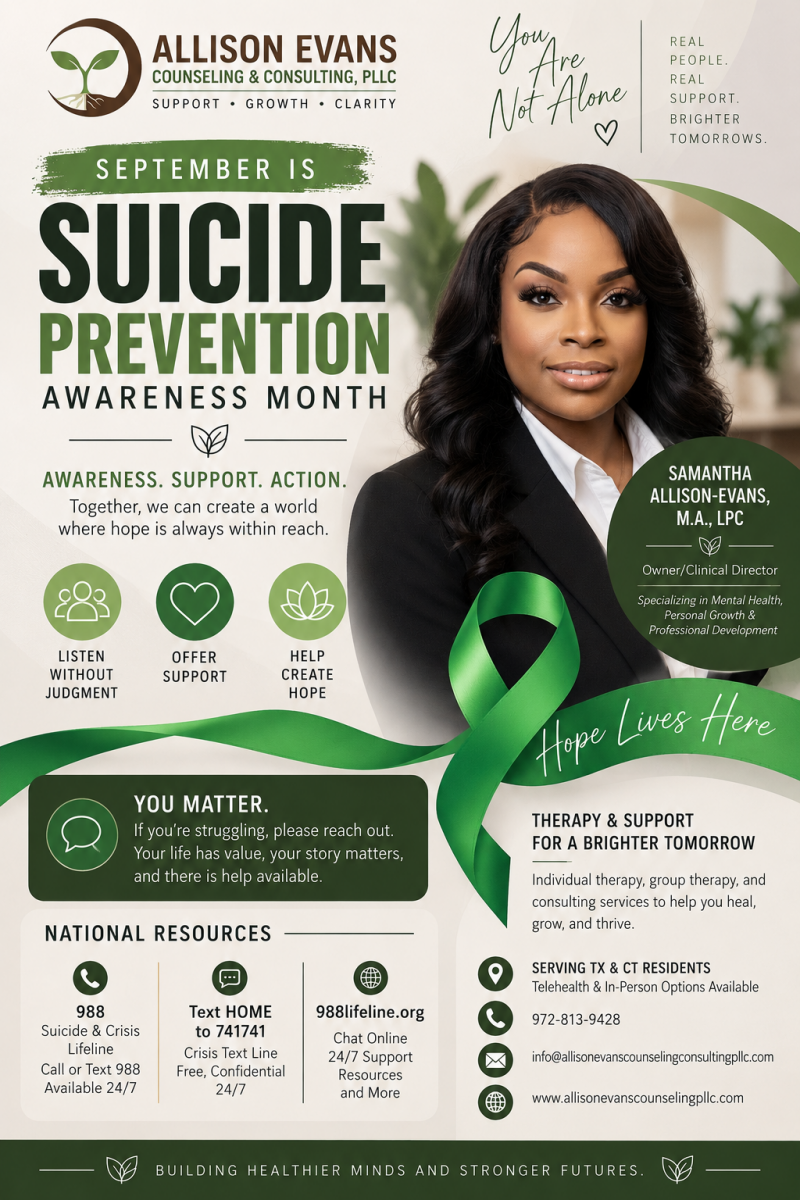
September is Suicide Prevention Awareness Month, a time dedicated to increasing awareness, reducing stigma, encouraging meaningful conversations about mental health, and reminding people that support is available.
For someone experiencing depression, trauma, grief, anxiety, overwhelming stress, or a major life transition, emotional pain can sometimes become so intense that it becomes difficult to imagine circumstances improving. Suicide prevention is not simply about responding during a crisis. It is also about creating environments where people feel safe enough to say, “I’m struggling,” before they reach that point.
At Allison Evans Counseling & Consulting, PLLC, we believe one of the most important messages we can share this month is simple:
You matter. Your story matters. You deserve support.
Suicide Prevention Begins With Conversation
Many people hesitate to discuss suicidal thoughts because they fear being judged, misunderstood, dismissed, or treated differently. Others may worry about becoming a burden to their family and friends.
That silence can increase feelings of isolation.
Having compassionate conversations about mental health can help create opportunities for connection and support. You do not have to be a therapist to check on someone you care about. Sometimes it begins with asking:
“How are you really doing?”
Then give the person space to answer.
Listening without immediately trying to solve the problem can be powerful. Statements such as “I’m here with you,” “I care about you,” and “Let’s find some support together” can remind someone that they do not have to navigate their pain alone.
Recognizing When Someone May Need Additional Support
There is no single appearance or behavior that identifies someone who is considering suicide. However, significant changes in behavior or emotional functioning deserve attention.
Possible warning signs can include:
- Talking about wanting to die or feeling hopeless
- Expressing that they feel like a burden
- Withdrawing from family, friends, or activities
- Significant changes in mood, sleep, or behavior
- Increased alcohol or substance use
- Giving away meaningful possessions or saying unexpected goodbyes
- Feeling trapped or believing there is no solution to current circumstances
- Engaging in unusually risky or reckless behavior
- Researching or making preparations related to suicide
Any direct statement about suicide should be taken seriously.
Asking About Suicide Does Not “Put the Idea” in Someone's Head
One common fear is that directly asking someone whether they are thinking about suicide might somehow encourage suicidal thoughts.
It does not.
If you are concerned about someone, it is appropriate to ask clearly and compassionately:
“Are you thinking about suicide?”
Being direct can give someone permission to talk openly about what they are experiencing. If they indicate that they may be in immediate danger, have a plan, or have access to the means to harm themselves, seek emergency or crisis assistance rather than attempting to manage the situation alone.
Therapy Can Create Space for Hope
Therapy provides a confidential environment where people can explore difficult emotions without having to pretend that everything is okay.
Depending on an individual's needs, therapy may help address depression, anxiety, trauma, grief and loss, relationship difficulties, chronic stress, workplace burnout, self-esteem concerns, emotional regulation, and major life transitions.
Therapy does not mean that every problem disappears immediately. Instead, the therapeutic process can help individuals better understand what they are experiencing, develop healthier coping strategies, strengthen support systems, recognize patterns contributing to distress, and identify reasons for continuing forward.
Sometimes hope begins with simply having a safe place to tell the truth about how much you are hurting.
Supporting Someone Who Is Struggling
If someone shares that they are struggling emotionally, you do not need to have the perfect response. Be present. Listen without judgment. Take concerns about suicide seriously. Encourage connection with a mental health professional or crisis resource, and if there is immediate danger, seek emergency assistance.
Most importantly, avoid minimizing someone's experience with statements such as “Other people have it worse,” “Just think positively,” or “You have so much to be grateful for.”
Someone can be loved, successful, accomplished, spiritual, surrounded by family, and still experience serious emotional distress.
Mental illness does not always look the way we expect it to look.
You Are More Than This Moment
If you are reading this while experiencing emotional pain, you may not know exactly what the next month, year, or chapter of your life will look like.
You do not have to figure everything out today.
Your current circumstances are part of your story. They do not have to be the ending.
There is strength in reaching out. There is strength in allowing someone else to sit with you during a difficult season. And there is strength in saying, “I need help.”
Crisis Support
If you or someone you know is experiencing suicidal thoughts or a mental health crisis in the United States, call or text 988 to reach the 988 Suicide & Crisis Lifeline, available 24 hours a day.
If there is an immediate life-threatening emergency, call 911 or go to the nearest emergency department.
Allison Evans Counseling & Consulting, PLLC
At Allison Evans Counseling & Consulting, PLLC, our goal is to provide compassionate mental health support while helping individuals develop healthier coping strategies, strengthen emotional wellness, and move toward meaningful change.
Samantha Allison-Evans, M.A., LPC
Owner/Clinical Director
📞 972-813-9428
🌿 Serving Texas & Connecticut residents
Support. Growth. Clarity.
Building healthier minds and stronger futures.
Suggested website title: Suicide Prevention Awareness Month: You Matter, Your Story Matters, and Help Is Available
SEO description: September is Suicide Prevention Awareness Month. Learn about suicide warning signs, how to support someone who may be struggling, the role of therapy, and where to find immediate crisis support.


Add comment
Comments